Manual Tiller Reviews & Broadfork Guides
Honest, detailed reviews of top-rated manual tillers and practical guidance on using broadfork tools to cultivate your garden with less strain and better results.
Why Gardeners Choose Manual Tillers
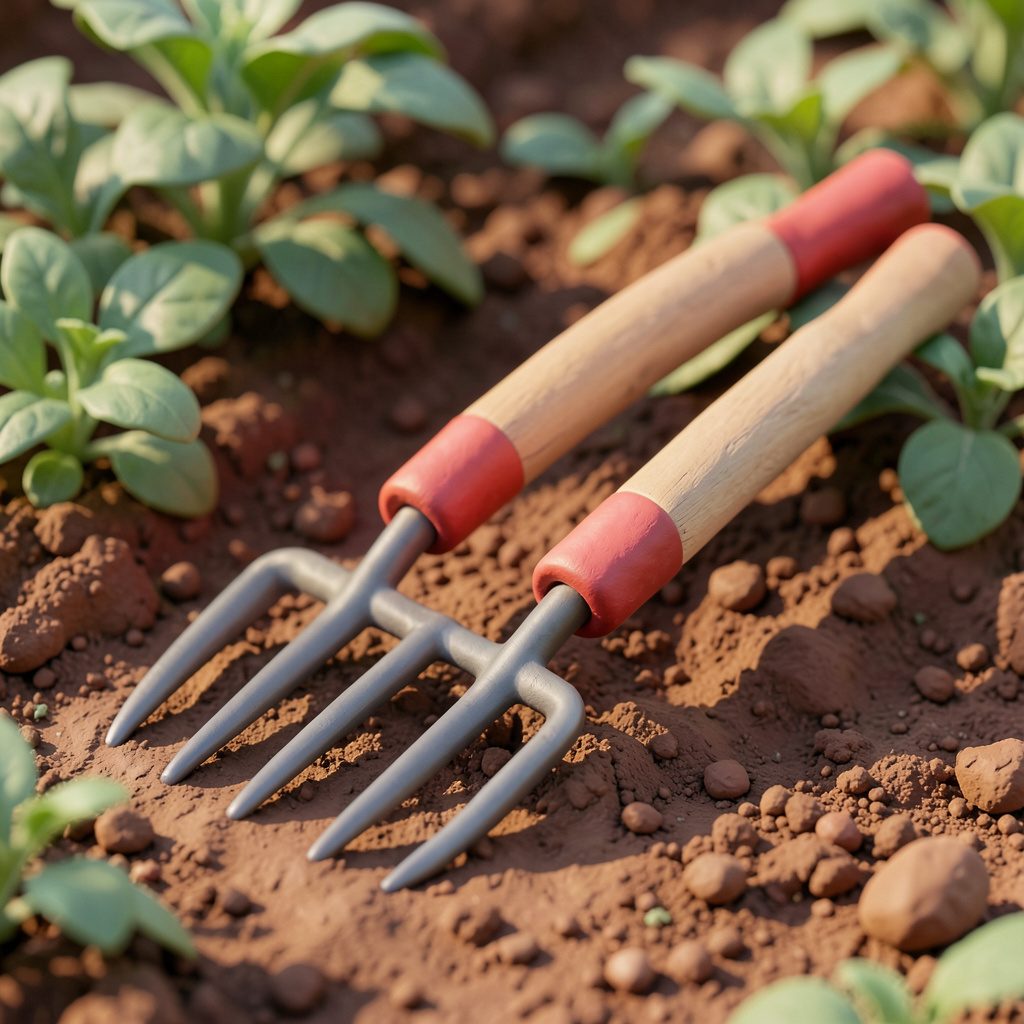
Manual tillers and broadforks let you loosen and aerate soil without the noise, fuel, or compaction that come with powered equipment. They are simple, durable, and give you precise control over your garden beds. Protective Gardening Gloves for Broadfork Work Protective Gardening Gloves for Broadfork Work can help keep your hands safe from blisters and soil abrasion during extended tilling sessions. Our reviews help you find the right tool for your soil type and gardening style.
A broadfork is one of the most underrated tools in the garden shed. Unlike a traditional tiller that churns and potentially damages soil structure, a broadfork uses long tines and a wide handlebar to loosen earth through leverage. Learn how combining a broadfork with green manure can naturally enrich your soil and improve garden health. Build Better Soil With a Broadfork and Green Manure You stand on the crossbar, rock the handles back, and the soil lifts gently without inverting its natural layers. This preserves beneficial organisms, earthworm tunnels, and the delicate fungal networks that plants rely on, making it a favorite among no-dig and regenerative gardeners everywhere.
Manual tillers appeal to gardeners who value simplicity and quiet. There is no engine to maintain, no fuel to store, and no extension cord to drag across wet grass. The experience of working with a hand tiller is meditative rather than mechanical, letting you hear birdsong and feel the soil's texture as you go. For small to medium garden plots, raised beds, and flower borders, a well-designed manual tiller can handle the work faster than you might expect.
Choosing between a broadfork and a rotary hand tiller depends largely on your soil type and what you intend to grow. Broadforks excel in established beds where you want deep aeration with minimal disturbance. Rotary or twist-style manual tillers are better suited for breaking up crusted soil, incorporating light amendments, or weeding between rows. Many serious gardeners eventually own both, using each tool at different stages of the growing season.
Soil health sits at the heart of every productive garden, and the tool you use to work the ground has a direct impact on that health. Powered rototillers can create a hardpan layer just below the tine depth, which restricts root growth and water movement. Manual tools let you work at a gentler pace, addressing compaction without pulverizing soil aggregates. The result is better drainage, improved aeration, and a living soil that feeds your plants naturally.
When evaluating a manual tiller, pay close attention to the handle design and tine construction. The best models feature ergonomic grips that reduce wrist strain and handles long enough to let you work upright without stooping. Tines should be forged from hardened steel that resists bending when you hit a stubborn root or stone. Weight matters too, a tool that is too heavy becomes exhausting, while one too light may lack the strength to penetrate compacted ground.
Gardeners with clay-heavy soil often approach manual tillers with skepticism, but the right tool can make all the difference. A broadfork with slightly shorter, thicker tines can crack open dense clay without requiring superhuman effort. Working when the soil is moist but not wet is key, and taking a patient, incremental approach yields results that improve season after season as organic matter builds up in the loosened profile.
Raised beds present a perfect environment for manual tillage. The contained soil stays loose and is never walked on, so compaction is minimal to begin with. A narrow broadfork or a short-handled cultivator lets you refresh the top few inches before planting without disturbing the deeper structure. This gentle approach keeps your bed's ecosystem intact and reduces the weed seeds brought to the surface by aggressive tilling.
The shift toward manual garden tools reflects a broader movement in home horticulture. Gardeners are increasingly aware of their environmental footprint and are seeking ways to reduce reliance on gas-powered equipment. A manual tiller or broadfork represents a one-time purchase that can last for decades with basic care, no emissions, no noise, and a direct connection to the ground that makes gardening feel more personal and intentional.
Maintaining a manual tiller is refreshingly straightforward. After each use, knock off clinging soil and wipe the tines with an oily rag to prevent rust during storage. Check wooden handles occasionally for splinters or cracks, and sand them smooth if needed. Unlike their powered counterparts, there are no spark plugs, air filters, or carburetors to service. A few minutes of care each season keeps these tools working beautifully for years.
"A broadfork changed the way I prepare my beds. It's faster than a spade and far easier on my back. I wish I had discovered these tools years ago."— a gardener who switched to manual cultivation
Stay in Touch
Have a question about manual tillers or broadforks? We are happy to help. Reach out through our contact page or sign up for updates.
Contact Us